Key Takeaways
- A supplier transition should start before quality drift becomes customer-facing.
- The safest transition runs containment, new supplier qualification, and pilot-run QC in parallel.
- The first supplier that helps launch a product is not always the supplier that can support scale.
- A backup supplier is not qualified until it has completed a real production run, not just a sample.
- The goal is operational continuity: customers should not feel the factory change.
Audio Enhancement supplier transition
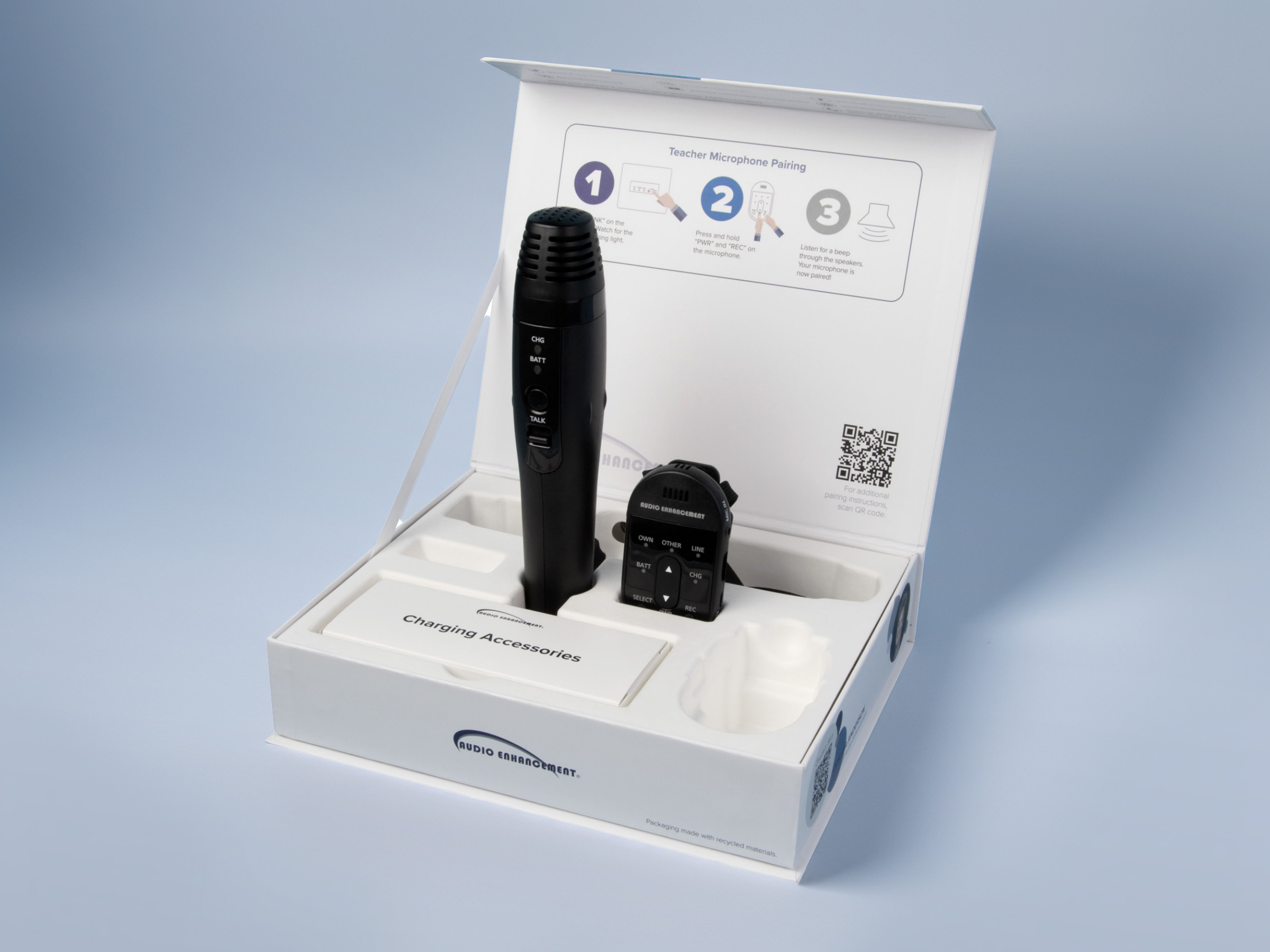
Audio Enhancement had outgrown the factory behind a visible classroom product component. Logic stabilized current inventory, managed pilot-run QC, and helped move the product toward a manufacturing base built for the next stage of scale.
What Is a Supplier Transition Strategy?
A supplier transition strategy is the operating plan for moving production from one supplier to another without creating a supply gap, quality drift, or customer-facing disruption. It covers current inventory, supplier qualification, sample development, pilot production, QC standards, and the handoff between factories.
Most brands treat supplier change as a sourcing project. That is too narrow. The supplier is only one part of the system. The product still needs to ship. Existing inventory still needs to be inspected. Customers still expect the product to look and perform the same.
That is why the safest supplier transition has two tracks: contain the current issue and build the next supplier path at the same time.
The First Signal Is Usually Quality Drift
Brands rarely decide to change suppliers when everything is calm. The trigger is usually inconsistency: finish variation, slower lead times, batch-to-batch differences, or a supplier that starts missing details it used to manage well.
That does not always mean the supplier became bad. Often it means the business changed. A factory that can support 5,000 units may not be the right factory at 50,000 units. The capabilities that made it useful early can become constraints later.
Audio Enhancement is a clean example. The visible component was small, but the customer saw it every day. Once the finish and craftsmanship started to drift, the risk was not just supplier performance. It was product perception.
Containment Comes Before Replacement
When quality issues are already inside the system, a new supplier does not fix the product already produced. The first move is containment.
Containment means inspecting existing inventory, removing nonconforming units, documenting what is usable, and protecting packout before the customer sees the problem. It is not strategic work on paper. It is physical operating work.
This is where many transitions fail. The brand focuses on the next supplier while existing inventory continues moving through the system with weak controls. That creates the exact customer-facing risk the transition is supposed to solve.
Supplier Qualification Needs a Real Production Run
A sample is not a qualified supplier. A factory can make a good sample and still fail when the run has real volume, real timing pressure, and real QC requirements.
The minimum qualification path should include sample review, material and finish validation, lead time confirmation, payment terms, packaging and labeling requirements, pilot production, QC documentation, and a small real purchase order.
The point is to prove execution, not capability. Capability is what the supplier says it can do. Execution is what happens when the calendar is moving and the product has to ship.
The Operating Goal Is an Invisible Transition
A successful supplier transition should be boring to the customer. The product still arrives. The finish still matches. The replenishment window still holds. The brand does not need to explain the factory change because the market never feels it.
That does not happen by accident. It takes parallel production planning, QC ownership, clear specs, and a team accountable for both the old supplier and the new one during the bridge period.
This is where an embedded operations partner is different from a consultant. A consultant can recommend the switch. An operating partner manages the risk while the switch happens.
Implementation Checklist
- Document the current operating risk in one sentence.
- Identify the owner for supplier, inventory, freight, and finance decisions.
- Link the issue to one business consequence: margin, availability, launch timing, or customer perception.
- Create a 30-day action plan before adding more analysis.