Audio Enhancement had outgrown the factory behind their premier classroom product component. Logic stabilized quality, kept operations running, and managed the transition to a manufacturing base that could support the next stage of scale — without disrupting product availability.
Jordan Harper, Logic Agency Inc.
Supply Chain
Manufacturing Transition
Quality Control
8 min read
Project Image
100%
Pilot Run QC
Every unit inspected before scale
0
Customer-Facing Disruption
Transition invisible to end customers
2×
Manufacturing Capacity
New supplier supports next growth stage
The Problem: A Supplier That Worked — Until It Didn't
Audio Enhancement makes classroom audio systems used by educators across the country. The product is highly visible in its environment. Every teacher and student who interacts with it sees it up close, every day.
At the center of this engagement was a badge — a small, customer-facing component that Bryan Wilson, Logic's COO, called the client's "premier product" piece. The badge wasn't a packaging problem. It was a product problem. The finish had started to drift. The craftsmanship was no longer consistent enough for a classroom-facing product at scale.
The underlying issue wasn't quality control failure — it was a supplier that had reached its ceiling. Early-stage factories can handle low order quantities and early-version specs. Once volume and customer expectations increase, the same supplier can become the wrong answer.
The commercial risk was real: if Audio Enhancement kept shipping a visible product component that looked inconsistent, the problem wouldn't register as a supplier issue to the customer. It would register as a product quality issue. That kind of perception is hard to undo at scale.
Before / Legacy Packaging
After / Updated Packaging
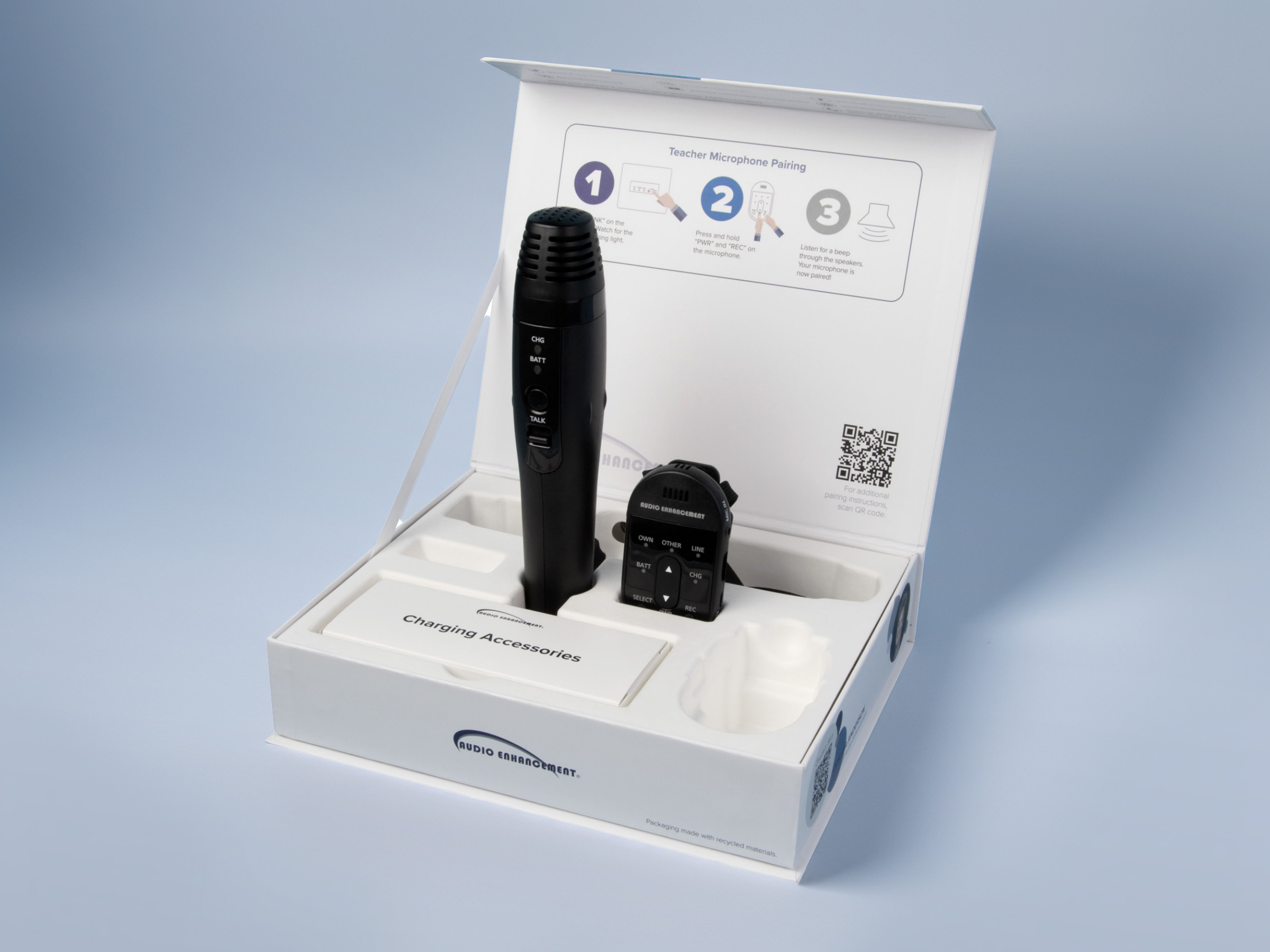
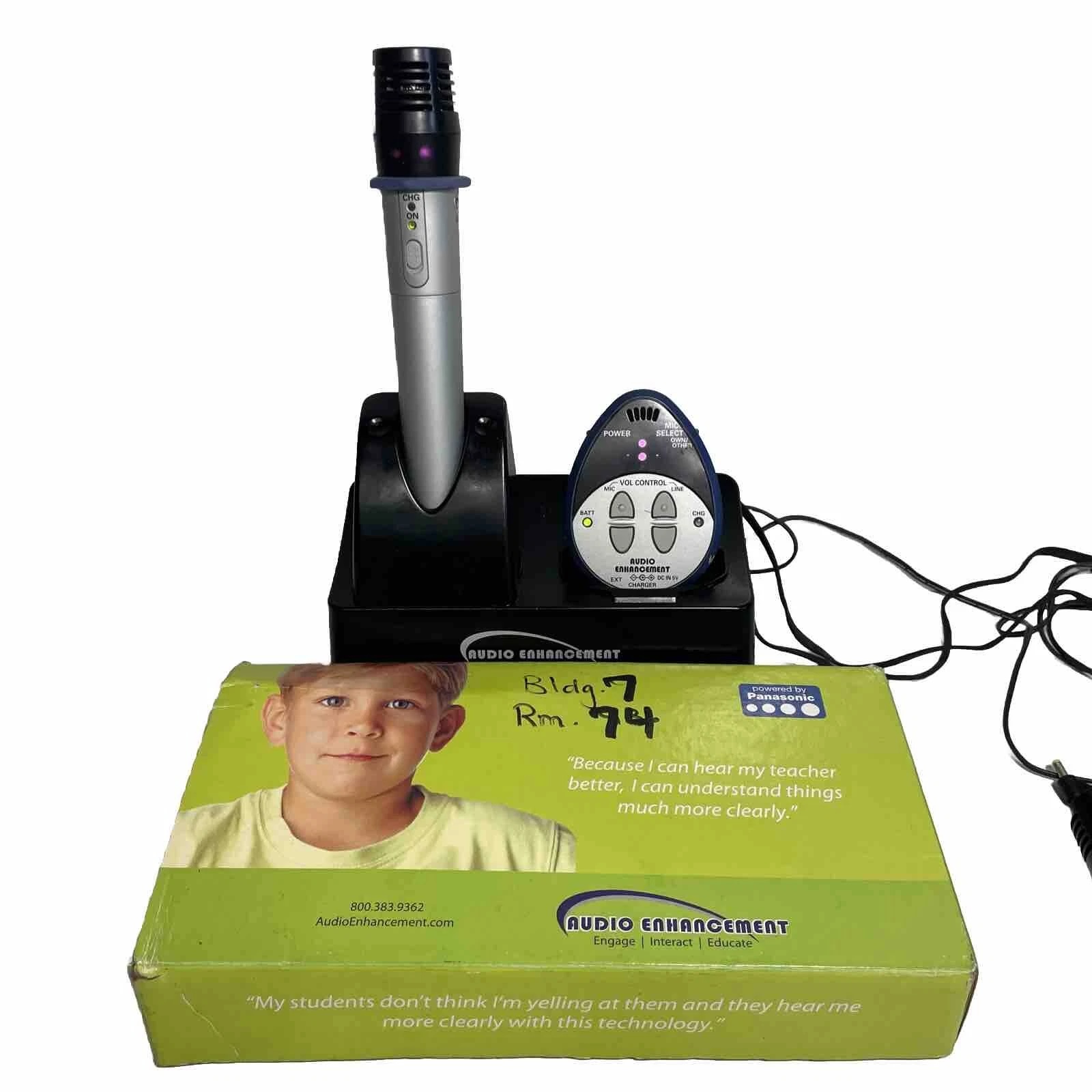
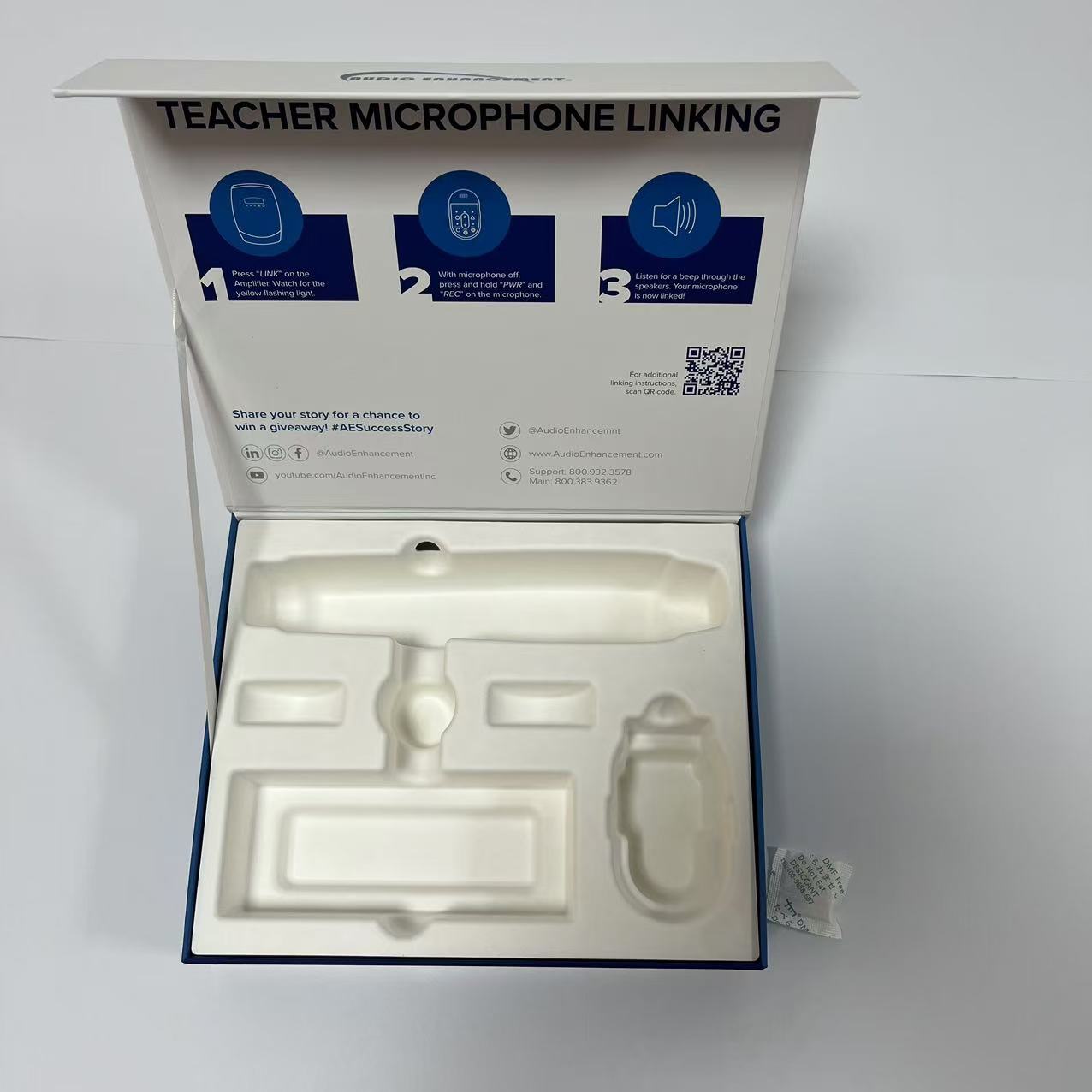
Before/After — product packaging and component presentation across the supplier transition.
What Logic Did: Two Problems at the Same Time
Logic handled the immediate situation and the structural one simultaneously — which is the only way supplier transitions at scale can work.
1
Containment — Protecting Current Inventory
The first priority was the product already produced. Logic built and managed a QC team to inspect existing badges, remove units that didn't meet the standard, and keep the client's operations moving while the supplier base was being rebuilt. Logic team members were on-site at the factory and with the client's packout team. The goal was to protect launch confidence and replenishment planning — not write a quality improvement plan.
2
Transition — The Operating Bridge
Changing factories midstream is delicate. The existing supplier was still producing. The new supplier needed samples, pilot runs, and validation. The product had to stay visually consistent throughout. Logic managed the full sequence: sample development, pilot runs, and 100% QC on those pilots while the current factory was still operating near its ceiling. That is not a normal handoff — it is an operating bridge designed to eliminate delay.
3
Scale — Unlocking the Next Stage
The long-term goal wasn't better badges. It was a manufacturing base capable of supporting the next level of volume and quality expectations without constant operational drag. Once the new supplier was qualified, Audio Enhancement could keep growing without the same ceiling limiting replenishment and rollout confidence.
Supplier Transition Timeline
Week 1–2 Audit
Week 3–4 Contain
Week 5–6 Sample
Week 7–8 Pilot QC
Week 9–10 Qualify
Week 11+ Scale
[ Illustrative timeline — actual durations are client-specific. ]
The Outcome: Operational Continuity Through a Supplier Change
The strongest measure of this project's success isn't a defect rate. It's that Audio Enhancement moved from a factory that had reached its ceiling to a manufacturing base capable of supporting continued growth — and customers never felt the transition.
Supplier transitions often create the exact problem they're supposed to fix: samples drift, pilot runs fail, the existing factory loses focus, inventory gets held up. Logic's role was to manage those risks in parallel, not sequentially, so the product could keep moving while the operating system caught up with the company's growth.
"The right factory at 5,000 units can be the wrong factory at 50,000. That's not a quality problem — it's a growth problem. And it needs to be solved like one."
Jordan Harper — Founder, Logic Agency Inc.
Why This Happens at Scaling Consumer Brands
Most brands don't outgrow their product before they outgrow their suppliers. The first factory is chosen for access, speed, or low MOQ. That's often right at the start. But as volume increases, as customer expectations solidify, and as retail or institutional accounts start demanding consistency at scale, the same factory can stop being the right answer.
The mistake is waiting until quality visibly breaks before building the next supplier layer. By then, the disruption is already customer-facing. For scaling brands in consumer electronics, hardware, CPG, or classroom products, Logic's approach is to qualify the next supplier before the current one hits its ceiling — not after.
We run the transition in parallel with current production — not sequentially. We identify new supplier candidates, manage sample development and pilot runs, and apply 100% QC to pilot production before the existing supplier is wound down. The goal is an operating bridge, not a gap.
We build a QC line around already-produced inventory: inspect units, remove non-conforming product, and document what's usable before it reaches the packout stage. For Audio Enhancement this meant Logic team presence both at the factory and with the client's internal team — not a remote review process.
The signals are usually: quality drift that correlates with volume increases, slower lead times as your orders grow relative to their capacity, inconsistency between batches that wasn't present at lower volumes, and an inability to absorb timeline changes. A supplier who was perfect at 5,000 units may not be the right answer at 50,000.
We work across consumer product categories — beauty, CPG, food and beverage, consumer electronics, hardware, and institutional products. The supply chain and packaging challenges are different by category, but the operational problems (supplier fit, quality at scale, retail compliance, inventory management) translate across verticals.
A consultant diagnoses and recommends. Logic owns execution. We manage vendors, run QC, coordinate the transition, and stay accountable for results. On a project like Audio Enhancement, we weren't advising from the outside — we had people on-site managing the actual process.
Supplier ceiling limiting your growth?
Most brands discover the problem after it's already customer-facing. We help you find and qualify the next supplier tier before you hit that ceiling.